The Supplier Discovery Dilemma: Obstacles, Inefficiencies, and AI-Powered Solutions
Discover why outdated supplier sourcing methods are holding businesses back and how AI is transforming procurement. Learn how smarter supplier discovery reduces risk, cuts costs, and drives strategic advantage.
Key Takeaways
Traditional sourcing methods are outdated, causing delays and inefficiencies.
Supplier mistakes lead to real losses, from disruptions to reputational damage.
Manual discovery limits visibility, slowing down strategic decision-making.
AI accelerates and improves supplier matching, using real-time, reliable data.
Smart sourcing drives agility and cost savings, giving companies a clear edge.
Supply chain disruptions cost businesses an estimated $184 million each year, underscoring the critical importance of resilient and reliable sourcing. While not all stem from supplier discovery failures, the ability to identify and qualify the right suppliers quickly and accurately plays a pivotal role in mitigating risk and maintaining supply chain continuity.
For procurement teams, challenges in supplier identification encounter consequences that extend well beyond operational inconvenience: they can lead to missed opportunities, increased costs, and long-term strategic setbacks. As global supply networks grow more complex, the need for smarter, faster, and more transparent sourcing methods becomes increasingly urgent.
Despite rapid advances in digital procurement, the sourcing process remains largely manual, opaque, and fragmented. Procurement professionals require nearly five weeks to identify a single supplier, while sourcing executives dedicate over 40 hours to the evaluation process. A 2024 Inspectorio survey reveals that 36% of procurement professionals see inefficient processes as their biggest supply chain management hurdle. On top of that, 93% of procurement and supply chain leaders face negative effects from vendor misinformation.
Forward-thinking companies refuse to accept these roadblocks as unavoidable, adopting digital procurement solutions powered by artificial intelligence. AI processes data at unprecedented speeds, dramatically reducing supplier discovery and vetting timeframes.
Modern supplier discovery platforms analyze supplier databases, performance reviews, and market trends to deliver detailed profiles that enable superior decision-making. The shift creates a strategic advantage for organizations willing to embrace data-driven procurement approaches.
The Supplier Discovery Challenge: What's Broken Today
Traditional supplier discovery methods remain trapped in outdated systems, creating significant inefficiencies for businesses worldwide. The fundamental problems plaguing today's approach require examination.
Fragmented Data & Limited Transparency
Finding reliable supplier information resembles solving a puzzle with missing pieces. Procurement teams navigate through siloed databases, outdated directories, and incomplete profiles to construct a complete picture. Critical data about supplier capabilities, certifications, and performance metrics exists in disconnected systems, making holistic evaluation nearly impossible.
The visibility crisis is stark: 65% of procurement leaders lack adequate transparency into their tier 1 suppliers, while visibility drops to just 18% for tier 2 suppliers and beyond. This information gap creates decision-making blind spots that impact strategic sourcing effectiveness.
Manual Processes in a Digital World
The supplier discovery process remains stubbornly manual despite increasing digitization demands. Key inefficiencies include:
Procurement professionals dedicating 30% of their time to administrative tasks rather than strategic activities.
Manually screening potential suppliers requiring 2-3 weeks on average
Email, spreadsheet, and phone-based communication creating bottlenecks
Time-consuming processes that delay critical business initiatives
This sluggishness creates competitive disadvantages in markets where agility determines success. Companies relying on manual processes waste valuable time that could drive innovation and growth.
Information Asymmetry and Decision-Making Gaps
Procurement teams frequently make decisions with incomplete information. Without standardized data collection methods, companies struggle to compare suppliers objectively. This leads to suboptimal choices based on limited factors like price alone.
The consequences are measurable:
Poor supplier selection contributes to 64% of organizations experiencing supply disruptions in the past year.
Information gaps enable greenwashing, with 42% of companies discovering suppliers had misrepresented environmental credentials.
Risk assessment becomes reactive rather than proactive.
These structural problems demonstrate why traditional supplier discovery requires modernization through data-driven approaches. The current system's limitations create vulnerabilities that impact operational efficiency, compliance, and strategic sourcing outcomes.
The Real Cost of Poor Supplier Discovery
Inefficient supplier discovery creates measurable business losses across multiple dimensions. Hidden costs accumulate rapidly, often without leadership recognizing the source of operational problems.
Supply Chain Disruption and Revenue Loss
Poor supplier selection causes operational instability and increased disruption frequency. Businesses in the DACH region face an average of $145 million annually in supply chain disruption costs, with low-performing suppliers directly linked to longer and more frequent outages. These disruptions not only incur immediate costs but also lead to lost opportunities and reputational damage.
Compliance Failures and ESG Risks
Inadequate supplier discovery exposes companies to serious compliance and ethical risks. ESG requirements have become an increasingly important factor in B2B purchasing decisions.
The Boohoo Case Study
British retailer Boohoo provides a stark example of ESG due diligence failure. When labor violations in its supply chain came to light, the company's shares plummeted 23%, wiping £1.1 billion from its market valuation. This demonstrates how supplier misinformation can create catastrophic financial consequences.
The information gap enables greenwashing, with 42% of companies discovering their suppliers had misrepresented environmental credentials. Such failures highlight the critical importance of proper supplier visibility and verification processes.
Overpayment Through Limited Supplier Options
Limited supplier discovery capabilities directly impact procurement costs. Organizations with inadequate inventory management maintain average accuracy rates of just 63%, while emergency purchases carry a 10-20% premium. Without strategic sourcing capabilities, procurement teams remain trapped in cost inefficiencies that compound over time.
The financial, operational, and reputational consequences create a significant competitive disadvantage in today's marketplace, where agility and cost efficiency determine success.
AI Solutions Reshape Supplier Discovery
Artificial intelligence is changing how procurement teams discover and evaluate suppliers, turning slow, manual processes into strategic advantages.
Automated Matching & Smart Filtering
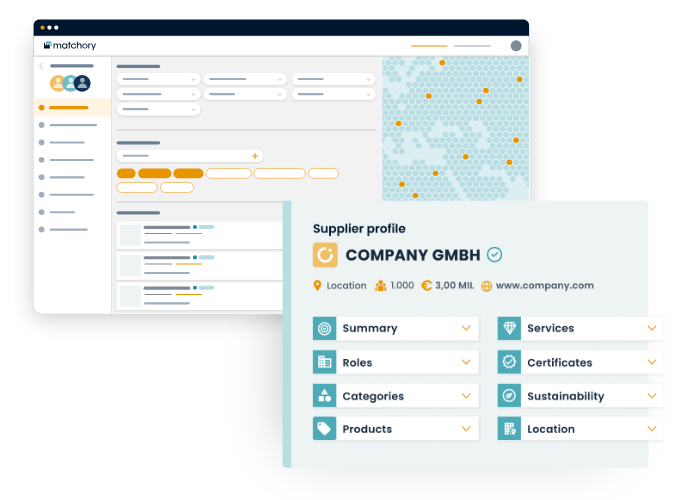
AI algorithms process supplier databases at incredible speeds and can analyze millions of suppliers in minutes. These systems look at multiple aspects of suppliers: their location, size, certifications, and track record. AI-powered platforms like Matchory scan millions of suppliers worldwide to match them with specific procurement needs.
Natural Language Search & GenAI Capabilities
The biggest breakthrough comes from natural language processing (NLP). Procurement teams can now search for suppliers using everyday language. To name just one example, users can ask for "ISO 9002 certified suppliers in Southeast Asia" or "non-GMO, USDA-certified corn syrup manufacturers".
The combination of natural language search and generative AI creates an intuitive interface that reduces the learning curve for procurement professionals while dramatically improving search accuracy and efficiency.
Selecting the Right Supplier Discovery Platform
Procurement technology selection requires strategic evaluation of key capabilities. The gap between traditional and AI-powered solutions continues expanding as businesses demand more sophisticated supplier discovery tools.
Key Platform Requirements
Supplier discovery platforms must deliver robust data quality and comprehensive market coverage. Essential capabilities include:
Advanced Search and Filtering Capabilities with intuitive interfaces
Risk Assessment Tools that evaluate financial stability and compliance
Integration Capabilities with existing ERP systems
Data Security Features including encryption and secure storage
The platform should provide structured data that drives strategic decision-making, not just raw information. Customized alerts about critical supplier changes enable procurement teams to take swift action when necessary.
Traditional vs. AI-Powered
Traditional supplier discovery relies on basic search engines, static databases, and manual processes. AI-powered platforms deliver substantially superior results through sophisticated algorithms. A prompt like "suppliers for high-pressure injection molding based in Southeast Asia that are ISO 9002 certified" yields three times the results compared to traditional search methods.
Workflow efficiency reveals the stark difference. Traditional approaches remain reactive and manual, while AI enables fully proactive strategies. Companies using autonomous AI systems achieve 23% better supplier terms on average compared to conventional methods.
Matchory's Strategic Advantage
Matchory exemplifies next-generation supplier discovery with its database containing over 14 million supplier profiles, covering 98% of global manufacturers. AI-driven automation accelerates procurement processes, reduces errors, and enhances transparency. Solutions like this transform supplier discovery from time-consuming manual processes into strategic competitive advantages that support long-term business success.
Conclusion
As supply chains grow more complex and volatile, the ability to discover and qualify the right suppliers has become a strategic imperative. Traditional methods, reliant on fragmented data and manual workflows, are proving insufficient in a world that demands speed, transparency, and resilience. The risks of sticking with outdated approaches, ranging from supply disruptions to ESG failures and inflated costs, are simply too great to ignore.
AI-powered supplier discovery platforms represent a clear path forward. By leveraging intelligent automation, natural language search, and real-time data, organizations can streamline sourcing, reduce risk, and uncover opportunities that would otherwise remain hidden. Tools like Matchory demonstrate how modern procurement technology not only solves today’s inefficiencies but also empowers teams to act strategically and proactively in a rapidly evolving global landscape.