The Great Procurement Exit: Retiring Knowledge, Attracting Talent
Companies face major challenges as baby boomers prepare to retire, making procurement knowledge management more crucial than ever. This workforce transformation could result in massive losses of institutional knowledge and expertise.
Key Takeaways
Procurement is quietly facing a generational crossroads. As Baby Boomer professionals, many of whom built their careers managing supplier relationships and navigating global supply chains, approach retirement, organizations are at risk of losing decades of institutional knowledge. This "brain drain" isn't just about losing experience; it's about losing trusted supplier networks, category expertise, and negotiation strategies that aren’t always documented.
At the same time, Gen Z is joining the job market faster and by 2025, they are projected to constitute 27% of the workforce. With them come fresh expectations: digital fluency, demand for transparency, and a strong desire to work for purpose-driven companies.
The challenge for procurement leaders is clear: how do you preserve deep expertise while building an environment that attracts and empowers the next wave of talent? This piece shows ways to connect these generations, safeguard procurement knowledge, and build an environment that resonates with the digital-native workforce.
The Baby Boomer Exit
A silver tsunami has hit procurement departments.The retirement of Baby Boomers is not a future problem, it’s happening now.
According to Deloitte, over 40% of the procurement workforce in developed economies is nearing retirement age within the next 5 to 10 years. Much of the veterans hold the most strategic positions: category managers, supplier relationship leads, and procurement directors. In procurement, where long-standing supplier relationships, tacit knowledge, and negotiation experience are often built over decades, this transition poses a serious operational risk. Many of these professionals carry critical know-how that lives not in systems, but in their heads.
The scale of procurement knowledge loss
Today's procurement retirement wave brings unique challenges compared to previous transitions. These professionals helped transform procurement from a tactical purchasing function to a strategic business partner.
When a senior category manager leaves, they don’t just walk out with a résumé: they take with them decades of insights into supplier behavior, pricing patterns, risk mitigation strategies, and informal networks that no ERP system fully captures. These aren’t easily replaced by job descriptions or handovers, their understanding goes beyond what's written in process documents.
The urgency is compounded by how slowly many organizations have digitized their procurement operations. If knowledge is still stored in spreadsheets or scattered email threads, there’s little hope of continuity when key staff retire. This silent knowledge drain is rarely visible until it’s too late.
Tacit vs explicit knowledge in procurement
Procurement knowledge comes in two basic forms. Organizations can easily document explicit knowledge in manuals, databases, and formal procedures. But tacit knowledge, the gut-level understanding that lives in someone's head, proves nowhere near as simple to capture, yet brings much more value. This knowledge shows up in procurement through subtle negotiation techniques with suppliers, contextual decision-making approaches, and relationship dynamics that lead to better outcomes.
Impact on supplier relationships and sourcing strategies
Organizations lose vital relationship capital when procurement veterans leave. Research shows this disrupts how external knowledge flows and weakens mutually beneficial alliances with suppliers that were built on trust. The loss of procurement knowledge also affects an organization's ability to handle vital tasks, which leads to lower productivity and efficiency. Companies end up "reinventing the wheel" with each new sourcing project, wasting resources and competitive edge.
Bridging the gap: strategies to retain and transfer knowledge
Smart organizations are taking steps to capture and share procurement expertise before their experienced staff leaves. Companies must act quickly to preserve their institutional memory.
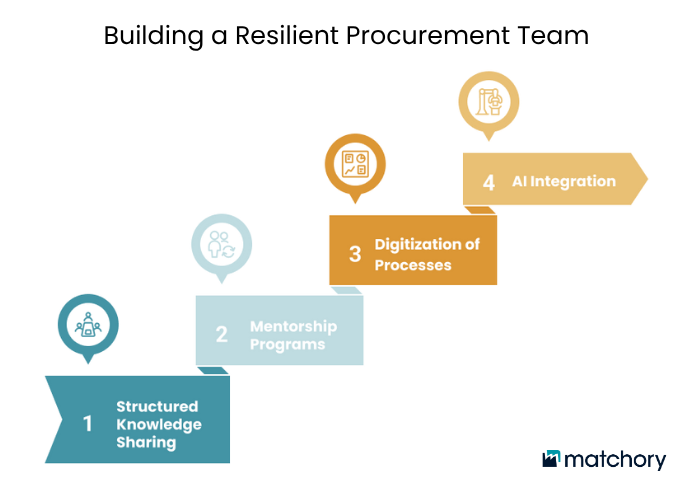
Start early with structured knowledge sharing programs: Well-planned programs capture tacit knowledge. Sharing this knowledge throughout an employee’s tenure (not just at exit) helps organizations stay resilient, boosts collaboration, and speeds up onboarding for new talent.
Use mentorship and reverse mentoring: Mentorship improves job satisfaction and ensures smoother transitions. Reverse mentoring, where Gen Z employees share digital skills with senior staff, builds mutual learning.
Digitize procurement processes and documentation: E-procurement tools reduce manual work, speed up approvals, and centralize critical supplier and process data. Digitization eliminates information silos and ensures continuity when experienced employees leave.
Leverage AI to preserve and enhance knowledge: AI tools interpret legacy data, automate routine tasks, and surface insights that would otherwise be lost. By supporting human decision-making, AI helps procurement teams focus on strategic activities while safeguarding institutional memory.
Attracting the next generation
As Gen Z enters the workforce, they’re bringing new expectations around technology, values, and impact. For procurement leaders, understanding what drives this generation is essential to filling critical skill gaps and shaping a future-ready function.
What Gen Z wants: Clear communication, meaning, and eco-friendly practices
Gen Z looks for meaningful work that matches their personal values. The numbers tell an interesting story: 44% have said no to jobs because companies weren't eco-friendly enough or lacked diversity. These young professionals see procurement as a chance to push for ethical sourcing.
Tech-savvy workers need modern tools
Digital natives like Gen Z don't work well with outdated procurement systems. Unlike older generations who adapted to spreadsheets, younger employees prefer accessible, mobile-friendly interfaces that streamline processes instead of complex software that slows them down.
Freedom to work remotely and grow professionally
A good work-life balance tops Gen Z's priority list. Research shows 77% would look for new jobs if they had to work in the office full-time. Clear paths for career growth also play a big role in their job choices. Supply chain leaders have noticed this trend: 61% say hybrid work is here to stay.
Bridging the Gap with Smart Procurement Tools
To navigate the generational shift, companies are turning to AI-powered tools like Matchory that automate supplier discovery and streamline procurement workflows. These platforms improve efficiency and help preserve institutional knowledge by centralizing data, tracking supplier interactions, and making decision-making processes transparent and repeatable.
By reducing dependency on individual expertise, smart tools ensure continuity even as experienced professionals retire. At the same time, they appeal to Gen Z talent by offering intuitive user interfaces, real-time insights, and a level of digital sophistication this generation expects. For young professionals used to seamless tech in their daily lives, modern procurement platforms are essential for engagement and productivity.
Practical Takeaways for Procurement Leaders
Audit knowledge risk. Identify which key procurement professionals are nearing retirement, and assess what critical knowledge needs to be captured before it’s lost.
Invest in AI-powered, user-friendly procurement platforms. Choose tools that centralize data, automate repetitive tasks, and offer intuitive interfaces. These platforms not only preserve institutional knowledge but also appeal to younger, tech-savvy professionals.
Promote your purpose through sourcing. Make your company’s values, like sustainability, diversity, or ethical sourcing, visible in procurement decisions. Gen Z wants to see that your actions align with your mission.
Involve Gen Z early in innovation and strategy. Don’t just hire Gen Z talent—empower them. Bring them into cross-functional teams, let them lead digital initiatives, and create space for their ideas to influence procurement strategy.
Conclusion: From Risk to Opportunity
As Baby Boomers retire, they take with them decades of hard-won procurement knowledge, creating both a challenge and a chance for reinvention. To stay ahead, companies must act quickly to capture this expertise while embracing the digital expectations of Gen Z. A balanced approach, combining mentorship, knowledge-sharing programs, and AI-powered tools, ensures continuity and lays the foundation for a modern, resilient procurement function.
Gen Z isn’t just looking for smart tech—they want purpose, transparency, and impact. This generational shift transforms procurement from a transactional role into a strategic, values-driven career path. Organizations that embrace this evolution will preserve critical knowledge, attract next-gen talent, and gain a clear competitive edge. The future of procurement belongs to teams that blend experience with innovation.