Supplier Sourcing vs. Supplier Discovery: Why the Difference Matters
Learn the crucial difference between supplier sourcing and discovery, and why mixing them up can cost you opportunities. From definitions to AI-powered tools, this guide shows how to turn discovery into a strategic edge in modern procurement.
Key Takeaways
Sourcing vs. Discovery: Sourcing fulfills an immediate need; discovery proactively builds a future-ready supplier network.
Strategic Impact: Clear separation of the two processes boosts procurement efficiency, innovation, and resilience.
Discovery’s Role: A strong discovery phase expands supplier options, reduces risk, and anticipates market changes.
Matchory's Advantage: Continuous, AI-driven discovery delivers hundreds of suppliers in minutes, not days.
In procurement, a single word can change the way teams work, how budgets are spent, and opportunities are uncovered. Yet two of the most common terms in the industry — supplier sourcing and supplier discovery — are often used interchangeably, blurring a critical distinction. Sourcing is about fulfilling an immediate need; discovery is about uncovering possibilities before the need arises. In a world of volatile supply chains, rising compliance demands, and fierce competition for innovation, knowing the difference isn’t a matter of semantics but a strategic advantage.
A strong supplier discovery phase sets the foundation for a successful sourcing process, which relates to better financial and operational outcomes. In this article, we’ll break down exactly what each term means, outline the key differences, explore why the confusion exists, and show how AI-powered tools are transforming supplier discovery.
Understanding the Basics: Sourcing vs Discovery
People in procurement often talk about sourcing and discovery as if they mean the same thing. A clear understanding of their different roles can substantially improve your procurement effectiveness.
Supplier Sourcing
Supplier sourcing follows a well-laid-out process to identify, evaluate, select, and engage suppliers who meet your organization's needs for raw materials, services, or technology. Your company's competitiveness, performance, and sustainability depend on this vital procurement component.
It is typically reactive: the process begins once there’s a requirement for a product or service, whether due to a new project, a supplier failure, or contract renewal. Sourcing usually involves setting criteria, researching options, requesting quotes (RFQs), comparing offers, and negotiating terms with shortlisted suppliers.
The ultimate goal is to secure the right supplier for the current need: on time, at the right cost, and within quality and compliance requirements. Sourcing shapes long-term supplier relationships and builds the foundation for operational success at a strategic level, unlike routine buying activities.
Supplier Discovery
Supplier discovery identifies potential suppliers who can fulfill your specific business needs for goods or services. This process starts the entire sourcing experience, similar to "finding needles in a global haystack".
This is a proactive, continuous search for potential suppliers that often comes before a direct need arises. It focuses on expanding a company’s supplier network, uncovering innovative or niche vendors, and gathering market intelligence to anticipate future requirements. Discovery is not tied to an active RFQ; instead, it builds a robust, future-ready supplier database. It can involve monitoring emerging markets, tracking competitor supply chains, or using AI-powered tools to scan global supplier data. The aim is to identify opportunities, reduce risk through diversification, and gain early access to innovative capabilities.
Why the Confusion Happens
Their close relationship causes confusion, supplier discovery exists as part of the broader sourcing process. Sourcing always needs some form of discovery, either as a current step or one completed before.
People use these terms interchangeably because discovery naturally fits within sourcing. Supply chain management's evolving terminology creates overlapping definitions. Historically, most procurement teams operated in a purely reactive mode. “Sourcing” became the umbrella term for almost any activity related to finding suppliers, whether it was searching for a brand-new vendor or negotiating with an existing one.
The rise of procurement software and industry marketing has also blurred the lines. Modern technology adds complexity since e-sourcing platforms combine discovery with broader sourcing activities. Meanwhile, different industries and regions have developed their own procurement vocabularies, leading to inconsistent definitions.
A Closer Look Into Key Differences
Better procurement outcomes come from understanding their distinct roles, notwithstanding that confusion. Several aspects that set sourcing and discovery apart.
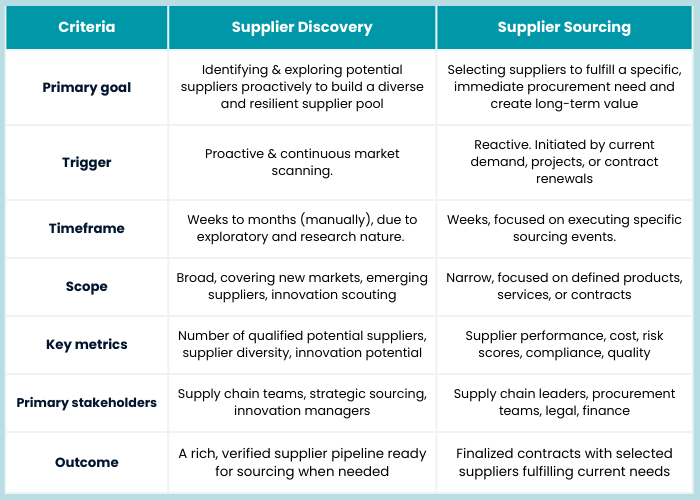
Trigger: At the time each process begins
Companies start supplier discovery from scratch when they need more suppliers or want to enter new markets. The sourcing process kicks in after teams find potential candidates or when current supplier contracts are about to expire.
Scope: Breadth of activities involved
Discovery zeroes in on finding potential suppliers who meet simple criteria to create a pool of options. Sourcing covers more ground. It includes evaluation, selection, onboarding, and managing suppliers throughout their lifecycle.
Tools & methods used
Teams use traditional methods like trade shows, industry networks, or direct outreach for discovery. Digital solutions such as supplier databases and AI-powered search engines help too. Sourcing needs more structured tools. These include spend analysis platforms, eSourcing systems, and networks that connect buyers with vendors.
Outcome: What each process delivers
Discovery creates a pool of potential suppliers to think over. The sourcing process takes these options and turns them into fully vetted, contracted suppliers that merge with your procurement ecosystem.
Breaking Down the Sourcing Process
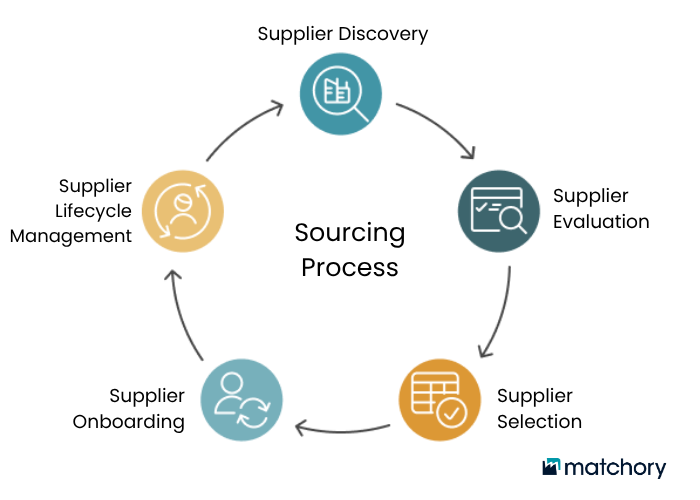
Here is a condensed step-by-step process of bringing suppliers into your supply chain.
1. Supplier Discovery
Before evaluation even begins, organizations need to identify who is out there — not just the suppliers they already know, but the ones they haven’t met yet. Supplier discovery is a proactive, ongoing process of scanning the market for potential partners that align with your company’s needs, values, and strategic goals. This stage often involves exploring new regions, industries, and niche markets, as well as monitoring emerging suppliers that competitors may not have identified.
Today, AI-powered platforms like Matchory make this process dramatically faster and more accurate by analyzing millions of supplier profiles, verifying data, and highlighting the best-fit options based on custom criteria. A strong discovery process expands your supplier pool, increases resilience against disruptions, and opens doors to innovation before a specific sourcing need arises.
2. Supplier Evaluation
Once potential suppliers are identified, the next step is a detailed assessment against specific criteria. This multi-criteria study looks at the supplier's organization (financial health, resources, production capacity) and what they offer (quality, price, lead times, environmental effects). A detailed framework with standard criteria that line up with your business priorities makes the evaluation work better.
Most companies start with requests for information (RFIs) to collect initial data. These questionnaires help them check if suppliers meet simple requirements before moving to a deeper assessment. Procurement teams can get a full picture of each potential partner through site visits, document reviews, and talks with stakeholders.
3. Supplier Selection
Selection means making the final choice about which suppliers to work with, even though evaluation provides the data. Smart selection uses a weighted decision matrix that balances multiple factors instead of just picking the lowest price. Research shows that 57.1% of procurement process performance directly depends on supplier evaluation and selection criteria.
The best selection frameworks bring in the core team from different departments to represent all business needs. Companies can make objective, analytical decisions that line up with overall business goals by giving the right importance to selection factors based on their strategic value.
4. Supplier Onboarding
Once a supplier is chosen, onboarding integrates them into your systems and processes. This includes gathering key documentation, verifying compliance, setting payment terms, and adding the supplier to procurement and accounting platforms.
Modern companies now use self-service supplier portals to make this process smoother. These systems let suppliers input information directly, which cuts manual entry errors by 66% and speeds up the setup process.
5. Supplier Lifecycle Management
The final piece goes beyond the first steps to handle the entire supplier relationship. Supplier lifecycle management (SLM) includes ongoing performance tracking through KPIs, risk assessment, relationship building, and continuous improvement projects.
Good SLM links sourcing decisions to long-term value creation through strategic supplier relationships. This approach sees suppliers as partners in breakthroughs, sustainability, and competitive advantage throughout the relationship, not just as replaceable vendors.
How Supplier Discovery Works Today
The right suppliers are hard to find in today's complex business world. You need to sort through huge amounts of information. Procurement teams can now choose from several approaches. These range from old-school methods to advanced AI solutions.
Manual vs Digital Discovery Methods
Traditional supplier discovery mainly depends on personal networks, industry events, and simple research. Companies can spend weeks at trade shows, use professional contacts or reach out directly to potential partners. These manual approaches feel familiar but have major drawbacks: they take too much time and don't cover enough ground.
McKinsey research shows traditional supplier searches usually take three months. Procurement professionals put in more than 40 hours of work, and they can only look at a few dozen suppliers out of thousands of candidates. This explains why many companies just renew existing contracts rather than look for better options.
Digital discovery methods use technology to make the process quicker. Supplier databases, e-procurement platforms, and AI-powered search engines can analyze millions of matches in minutes. The rise from basic digital databases to dynamic AI-driven solutions has altered the map of how businesses find and assess potential partners.
Challenges in Global Supplier Discovery
Modern technology hasn't solved all problems in global supplier discovery. Data quality ranks as the biggest problem: procurement teams often work with supplier information that's incomplete, old, or wrong. Cultural differences create another major hurdle, especially in international sourcing. Business etiquette, communication styles, and compliance standards vary widely. These differences can turn promising partnerships into headaches without proper handling.
Furthermore, ESG performance tracking has grown more crucial. About 92% of B2B buyers research sustainability requirements before making purchases. This adds more complexity to finding the right suppliers.
AI as the Catalyst for True Supplier Discovery
In today’s fast-moving supply chains, manual supplier discovery is no longer practical. AI has changed how we find suppliers. It cuts search times dramatically while making results more accurate, scanning millions of supplier profiles in seconds and match specific requirements precisely.
AI does more than just find suppliers, it assesses them too. Advanced platforms constantly analyze supplier data across many areas. These include financial stability, certifications, compliance records, and performance metrics. This detailed assessment helps organizations make smarter decisions and reduce risk.
Matchory is an incredible addition to your digital sourcing ecosystem. Its AI-powered platform replaces static searches with continuous, global supplier intelligence. A vast database, algorithm-driven selection, and the generative AI assistant Mats make defining requirements and finding suppliers as simple as having a conversation. What once took days now takes minutes, delivering hundreds of relevant suppliers instantly.
In an era where speed, precision, and foresight define procurement success, AI-powered supplier discovery is no longer optional. With Matchory, organizations can transform discovery into an always-on strategic advantage, building resilient, innovative, and future-ready supply chains.