Article
July 15, 2025
The 5 Forces Disrupting Global Supply Chains (and How to Respond)
Discover the five forces reshaping global supply chains in 2025 and how to stay ahead with smarter sourcing, digital tools, and AI-powered resilience
Read more


The EV (electric vehicle) boom is reshaping global automotive supply chains. Discover how shifting technologies, EU regulations, and specialized sourcing needs are forcing manufacturers, especially in the DACH region, to rethink supplier strategies and embrace digital tools.


Global electric vehicle sales have jumped to new heights: from 1 million units in 2022 to 1.6 million in 2023, a 60% increase that has created new procurement challenges across automotive supply chains. The year 2024 culminated with 17.1 million EVs sold worldwide, and sales are projected to surpass the 20 million mark this year. Yet, problems still remain. This growth pattern presents manufacturers with complex sourcing decisions that extend far beyond traditional vehicle components.
Automotive supply chain managers face challenges from every angle. Today's EVs need up to 3,000 semiconductors to ensure safety and performance. The Democratic Republic of Congo supplies 70% of global cobalt, while China leads 70% of lithium-ion battery production. These geographic concentrations create significant risks for EV supply chains.
This piece explains how EVs change sourcing needs compared to traditional vehicles. You'll learn why the EU Green Deal speeds up this transition and what makes battery and semiconductor sourcing uniquely challenging. We'll show you how conscious sourcing and better supplier selection methods can help you build stronger automotive supply chains for tomorrow.
The automotive industry's change from internal combustion engines (ICE) to electric vehicles goes beyond product development. Manufacturers and their suppliers must create new sourcing strategies and build different capabilities.
EVs and traditional vehicles have major structural differences. Electric motors contain just three moving parts compared to 113 in a four-cylinder internal combustion engine. EVs don't need exhaust systems, turbochargers, or complex transmissions, which changes how companies source their components.
The mechanical simplicity brings its own challenges. Cars will see their powertrain and electronics value rise to 52% by 2025, up from 44% in 2015. Lithium-ion battery packs can make up half of an EV's total value, and companies face a critical challenge because these batteries come from suppliers outside the usual automotive networks.
Component suppliers now have a smaller market to work with. They might add just 35-40% value to EVs, which is less than the 50-55% for ICE vehicles. Suppliers who can't adapt might face financial problems.
The EU Green Deal's ambitious targets drive this transition: April 2023 brought stricter emission rules with a complete reduction deadline by 2035. The European Commission launched the Green Deal Industrial Plan to support this change. This plan will put €150 billion into clean technology research, manufacturing, and supply chains.
These new rules create challenges and chances for growth. The Clean Industrial Deal helps European battery manufacturing grow through the Critical Raw Materials Act, and new sustainability rules for buying parts will reshape how companies choose suppliers, especially in the automotive sector.
While good on paper, the challenges continue to pile up. The EU Green Deal is driving urgent change across the automotive industry, and the zero-emission targets set for 2035 put manufacturers under pressure to fast-track EV production—often before the market and supply chains are fully ready. Europe still relies heavily on global sources for critical materials (eg. lithium, cobalt, and semiconductors) creating bottlenecks and geopolitical risks.
Smaller suppliers face high investment costs to pivot toward EV-compatible technologies, while larger OEMs must restructure long-standing relationships and retrain their ecosystems. On top of that, new regulatory requirements around sustainability, traceability, and due diligence add complexity to sourcing processes. The transition is clear but navigating it requires speed, innovation, and a deep transformation of how supply chains operate.
The DACH region (Germany, Austria, Switzerland) faces unique risks because of its manufacturing focus. EU regions where motor vehicle manufacturing employs more than 1% of workers make up almost a third of all regions. Four large regions, Germany, Czechia, Hungary, and Romania, in some cases employ over 7% of their workforce in this sector.
German manufacturers who led in advanced ICE technology might lose ground to Tesla, Toyota, or even Hyundai and Kia. Furthermore, 2023 had Germany abruptly end its Umweltbonus, the purchase subsidy of up to €4,500 for battery-electric vehicles, leaving buyers and manufacturers scrambling.
The result? EV sales plunged by 27–28% in 2024, dropping EV market share to just 13.5%, while hybrid sales surged. The United Kingdom has overtaken Germany as the new leader in BEV sales, primarily due to implementing the UK ZEV (Zero Emission Vehicle) mandate.
However, not all is lost. The government is shifting focus toward corporate incentives: starting July 2025, businesses will benefit from accelerated depreciation and extended tax breaks on EVs. This pivot signals a move from consumer-focused support to boosting fleet adoption, reshaping demand patterns and supplier priorities across the automotive sector.
"Failure by Tier 1 suppliers to take charge of the value chain and reduce unit costs is likely to change the EV market landscape into one ruled by highly integrated automakers — or by globally active Chinese suppliers." — Oliver Wyman, Global management consulting firm specializing in automotive industry
The automotive supply chain's shift toward electrification brings challenges that go far beyond swapping out parts. EV makers just need completely new ways to handle procurement, supplier relationships, and risk management.
The traditional five-year development cycles for ICE vehicles are becoming outdated faster in the EV era. S&P has adjusted its 2025 EV share of global production from 20% to 30%, suggesting quicker adoption than expected.
On top of that, companies now treat EVs more like tech products than traditional vehicles. This shift requires agile manufacturing processes and modular platforms where companies can upgrade specific components without replacing the whole vehicle. Suppliers must think software-first and adapt to shorter product lifecycles.
Modern EVs use about 3,000 semiconductors, or twice as many as diesel-powered vehicles. Semiconductor manufacturers don't rush to make automotive-specific chips since they make up only EUR 40.08 billion of the EUR 572.53 billion global market.
The design cycles for automotive chips take up to 60 months, much longer than other semiconductor applications. Most automotive semiconductors use mature nodes (>28nm), while industry investment focuses on smaller nodes (<11nm). This mismatch creates supply bottlenecks.
Battery production creates major geopolitical risks. As mentioned before, China controls over 75% of global lithium-ion battery cell capacity and nearly half of lithium carbonate and cobalt refining. The Democratic Republic of Congo provides over 60% of global cobalt, while Indonesia has put restrictions on nickel exports.
The EU Critical Raw Materials Act tackles these risks. It aims for 10% domestic mining, 15% recycling, and 40% processing of critical materials by 2030. No single third country should supply more than 65%.
EV production relies on specialized components like bus bars, flat conductors in power distribution systems that handle 15% more power than cables while taking up less space. These parts require precise manufacturing processes like ultrasonic welding with closed-loop control systems.
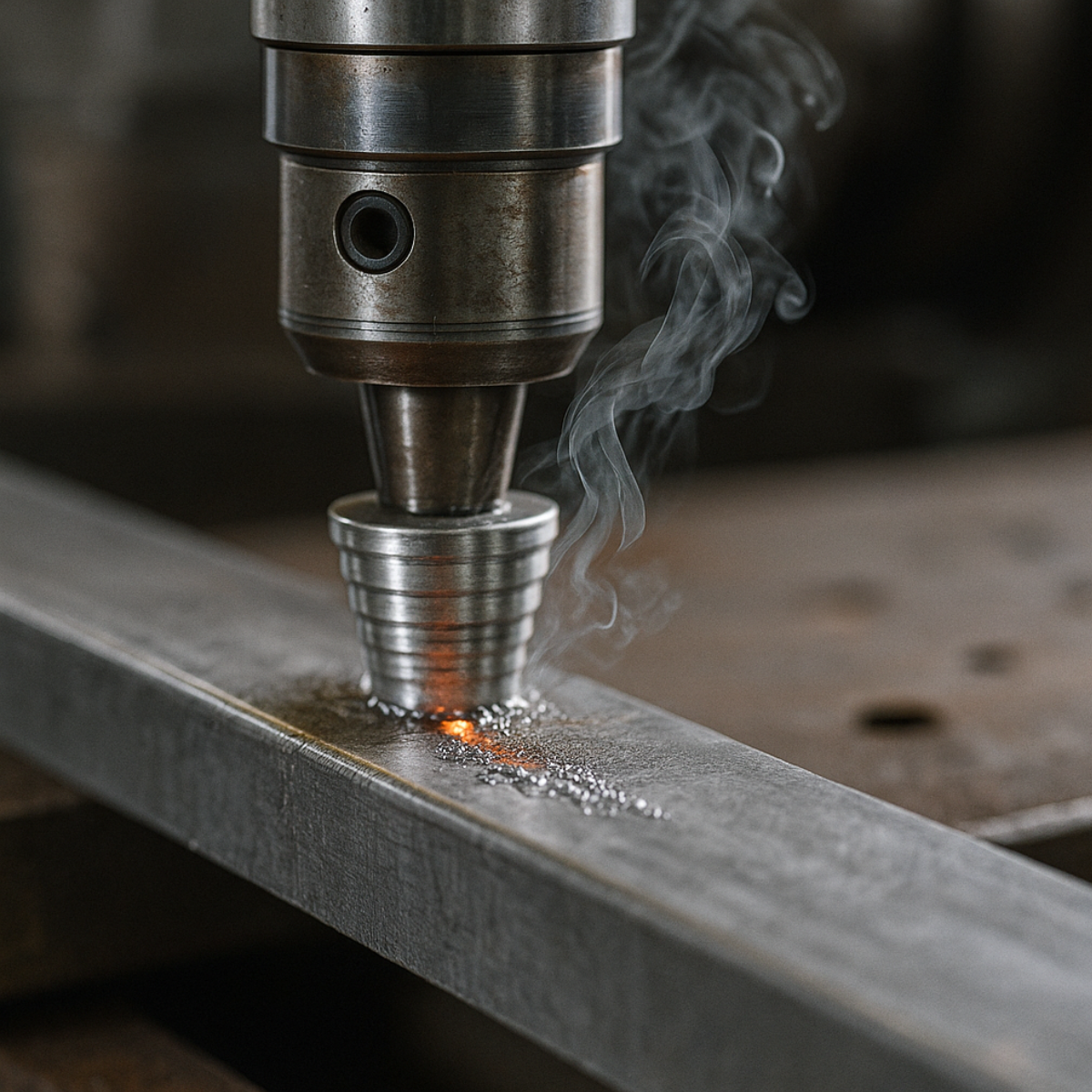
Battery housings need friction stir welding (FSW) to join materials without melting them. This technique minimizes heat effects while creating defect-free bonds. Automotive suppliers must develop new skills or team up with tech specialists outside their traditional networks to handle these specialized processes.
EV manufacturing's complex world makes traditional supplier sourcing methods less effective. Because supply chains in the automotive industry keep getting more complex, data visibility has become a game-changer.
Legacy sourcing systems rely on outdated databases, manual processes, and static supplier lists. They’re too slow and too rigid for today’s dynamic environment. Procurement teams waste time vetting suppliers that may no longer be relevant, while lacking real-time visibility into performance, compliance, or capacity.
Digital platforms are changing how companies find suppliers in the EV era. These tools have transformed a slow, error-prone process into a quick, evidence-based operation that solves many earlier challenges by:
Faster identification of qualified suppliers. Digital procurement platforms like Matchory significantly speed up how companies find and evaluate new suppliers. Instead of spending weeks on manual searches, procurement teams can now instantly scan hundreds of potential partners. This agility gives companies a competitive edge and supports faster innovation.
Filtering by capabilities, certifications, and regions. Modern platforms allow precise filtering based on points like technical capabilities, certifications, and location. Furthermore, Matchory enables teams to filter by sustainability-related keywords and criteria to quickly identify and approve suppliers that meet specific EV production needs, especially for highly specialized components.
Improving resilience through diversified sourcing. Diversifying the supplier base is now critical. Leading EV manufacturers reduce risk by sourcing essential materials like lithium and nickel from multiple regions. Digital tools make it easier to find reliable alternatives, build long-term partnerships, and maintain supply chain stability amid global uncertainty.
The shift to electric vehicles is reshaping automotive supply chains, demanding new components, materials, and supplier capabilities. For manufacturers in the DACH region, success now depends on adapting to battery technology, semiconductor sourcing, and advanced production methods—especially as the EU Green Deal accelerates this transition.
To stay competitive, companies must move beyond traditional sourcing methods. Digital platforms powered by real-time data enable faster supplier discovery, better risk management, and stronger supply chain resilience. Those who embrace these tools and diversify their supplier base will be best positioned to lead in the evolving EV landscape.

Schedule a product demo video call with a supplier scouting expert.
 Book a demo



Sit back and get a quick overview of the features of the Matchory platform.

Tell us your inquiry and get in touch with the respective expert.