Beyond China: The New Frontier of Plastic Supplier Diversification
Supply chains face risk with China’s plastic dominance. See how emerging hubs and diversification secure long-term resilience.
Key Takeaways
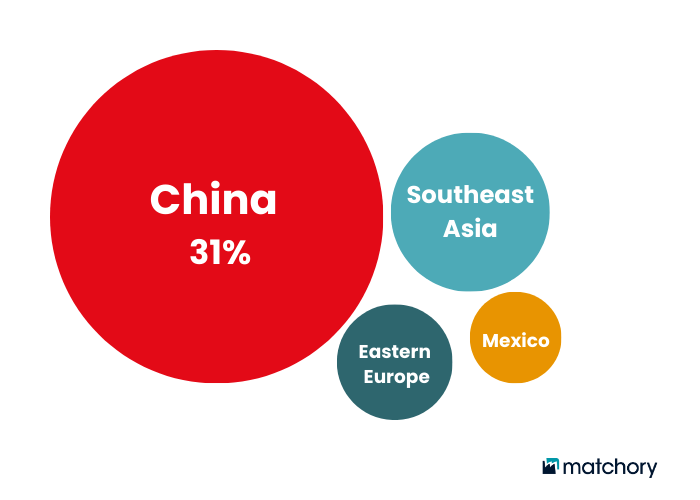
China dominates plastics with ~30% market share, but overreliance creates supply chain risks.
Tariffs, tensions, and disruptions make geographic concentration increasingly fragile.
New hubs are emerging in Southeast Asia, Eastern Europe, and North America with unique strengths.
Supplier diversification builds resilience while unlocking cost, innovation, and sustainability benefits.
AI-powered supplier discovery tools make diversification faster, smarter, and data-driven.
The global plastic compounding market reached USD 72.6 billion in 2024 and is projected to nearly triple to 182.0 billion by 2035. At the heart of this growth lies China, which produces roughly 30% of worldwide plastic components and has become the backbone of global plastic production. Its injection molding market alone reached 42 billion dollars by 2022, expanding at 5.3% annually since 2018 and outpacing the global average of 4.1%. These figures underscore both China’s resilience and its dominance in plastics manufacturing.
Such dominance comes at a price, as concentrated production creates significant vulnerabilities for procurement and supply chain stability. Heavy reliance on one geography leaves businesses exposed to tariffs, geopolitical tensions, shipping disruptions, and tightening sustainability regulations. The stakes are particularly high in sectors like automotive, which consumes more than one-third of global plastic volumes.
While China is expected to remain the fastest-growing national market, supplier diversification has shifted from a “nice-to-have” to a strategic necessity. To future-proof supply chains, procurement leaders must look beyond China, exploring alternative compounding hubs, leveraging their advantages, and considering how modern supplier discovery tools like Matchory can make this process faster and more data-driven.
Let's explore emerging manufacturing centers, their advantages, and ways to implement balanced sourcing strategies that alleviate risks while maintaining competitive edges.
China’s Dominance in Plastic Compounding
China didn't become a plastic compounding powerhouse overnight. The country spent decades building manufacturing capabilities that now make it the life-blood of global plastic production.
How China became the global leader
The Chinese government's investment in manufacturing infrastructure during the 1990s and early 2000s sparked the country's rise in plastic compounding. Lower labor costs combined with strategic economic zones and massive industrial capacity created ideal conditions for rapid growth. The country gained high cost advantages over European and North American manufacturing centers because it could scale production quickly.
Chinese manufacturers built their expertise and expanded domestic consumption. They started with high-volume, simpler compounds and grew to produce sophisticated engineering plastics that meet strict international standards.
Key sectors driving demand for Chinese compounds
The automotive sector leads the pack and uses more than one-third of global plastic compound volumes. Electronic device manufacturing is another vital growth driver. Chinese factories produce components for everything from smartphones to appliances.
Construction materials represent the third major sector where plastic compounds have taken over traditional materials. Chinese compounds also power the packaging industry, which grows with the worldwide e-commerce boom.
The role of integrated supply chains & infrastructure
China's biggest competitive edge comes from its vertically integrated supply chains: raw material producers, compounders, molders, and finished product manufacturers work close to each other. This proximity cuts transportation costs and delivery times.
The country's modern ports, extensive rail networks, and efficient highways make domestic and international shipping easier. This reliable infrastructure helps Western manufacturers maintain just-in-time delivery schedules.
Manufacturing clusters in China have created powerful network effects. The concentration of expertise, equipment, and talent drives state-of-the-art improvements and optimizes operations. This ecosystem attracted more investment and strengthened China's market position.
The Hidden Risks of Over-Reliance
China's manufacturing powerhouse status masks several vulnerabilities that could shake your supply chain stability. Smart businesses must pay attention to these hidden risks as global conditions keep changing.
Tariffs & trade policy volatility
Unpredictable international trade policies create major financial risks. Recent tariffs have put Chinese plastics factories at risk of closing because they can't handle duties on US ethane (a critical petrochemical feedstock). These extra costs flow through the supply chain and squeeze profit margins when manufacturers can't quickly pass expenses to customers.
The Plastics Industry Association warns that broad tariffs "will disrupt supply chains, increase production costs, and undermine global competitiveness". Tariffs on imported plastics and machinery can suddenly raise cost of goods sold and derail capital expenditure plans.
Geopolitical tensions & IP concerns
IP protection remains the biggest challenge for multinational corporations doing business in China. US government data shows China is responsible for nearly 80% of all IP thefts from US-headquartered organizations, resulting in €286.26 billion in lost business. European manufacturers have lost 20% of their potential profits due to IP theft in China.
Shipping disruptions & cost instability
Supply chain problems create headaches for plastic compounders. The last several years brought unprecedented challenges like raw material shortages, a lack of shipping containers, and clogged ports that stretched lead times.
Raw material prices keep fluctuating, which hurts production costs and disrupts supply chains while cutting into plastic compounders' profits. Ships stuck at ports and container shortages make it hard to import resin and manufacturing equipment.
Government regulations are changing faster as countries pass laws to tackle plastic waste. The European Union's Circular Economy Package requires by 2025, all plastic packaging must be reusable or recyclable. Micro(nano)plastic pollution has caused systemic ecological problems globally, including greenhouse gas emissions that fuel climate change. Companies are now required to adapt to new compliance standards and might have to invest heavily in eco-friendly technologies and processes.
New Hubs Reshaping the Global Supply Chain
Supply chain vulnerabilities from China's market dominance have prompted several regions to develop faster into viable alternatives for plastic compounding operations.
1. Southeast Asia: Vietnam, Thailand, and Malaysia
Thailand dominates Southeast Asia's plastic compounding market and controls over 25.52% of regional revenue. Vietnam's plastic industry has achieved remarkable success with a 17% average annual growth rate that serves more than 160 countries globally. Malaysia's strategic position comes from its expanding industrial base and modern compounding facilities that focus on green practices.
2. Eastern Europe: Poland, Hungary, and Czech Republic
Eastern Europe presents a unique market profile compared to its western counterpart. PVC applications make up nearly half of all compound production in Central Europe. Regional presence has strengthened through key technical compounders like Silon (Czech Republic), Inno-Comp (Hungary), and Rhodia and Zachem (Poland). TER Plastics POLYMER GROUP has built sales organizations since 2015 in this dynamic region.
3. North America: U.S. and Mexico's growing role
Mexico's plastic industry hit USD 52 billion in 2022, and the United States supplied 61% of its imports (USD 22.6 billion). The United States-Mexico-Canada Agreement has driven Mexico's growth through nearshoring activity and new orders.
Comparative advantages of emerging regions
These regions provide benefits beyond reducing China-dependency risk. Southeast Asian nations excel with competitive labor costs, while Eastern Europe brings technical expertise close to European markets. North American regions have also benefited from integrated supply chains under favorable trade agreements.
Strategic Benefits of Supplier Diversification
Having multiple plastic compounding suppliers outside China brings clear benefits that go way beyond the reach and influence of just lowering risks. These benefits create lasting competitive edges for manufacturers who think ahead.
Resilience & continuity: Multiple suppliers across regions reduce exposure to local disruptions, whether from trade disputes, extreme weather, or pandemics.
Cost leverage: A broader supplier base strengthens negotiating power and optimizes costs, while digital tools and real-time data allow companies to manage risks before they escalate.
Innovation access: Different regions bring unique expertise, from advanced PVC in Eastern Europe to bio-based materials in Southeast Asia.
Sustainability & compliance: Working with suppliers aligned to circular economy practices ensures companies can adapt to evolving environmental regulations and customer expectations.
This is where supplier discovery becomes critical. Traditional sourcing methods are slow and limited, but AI-powered platforms like Matchory make it possible to instantly map global supplier landscapes, identify hidden champions, and build a truly diversified supplier portfolio that balances resilience, cost, and innovation.
Conclusion
The global plastic compounding industry is at a turning point. With China holding around 30% of the market, heavy reliance on one country creates clear risks for supply chains. Strategic diversification is the key to staying competitive.
Emerging hubs in Southeast Asia, Eastern Europe, and North America offer strong alternatives. Thailand’s regional strength, Vietnam’s rapid growth, and Mexico’s trade advantages show how spreading your supplier base delivers more than just risk reduction.
Supply chain diversification will become standard practice soon. China will stay a key manufacturing center, but spreading operations across regions creates stability and opens doors to innovation. Geographic concentration simply cannot match the benefits and companies that spread their supply base now will succeed long-term in our unpredictable global market. This strategy ensures both business continuity and a competitive edge for years ahead.